

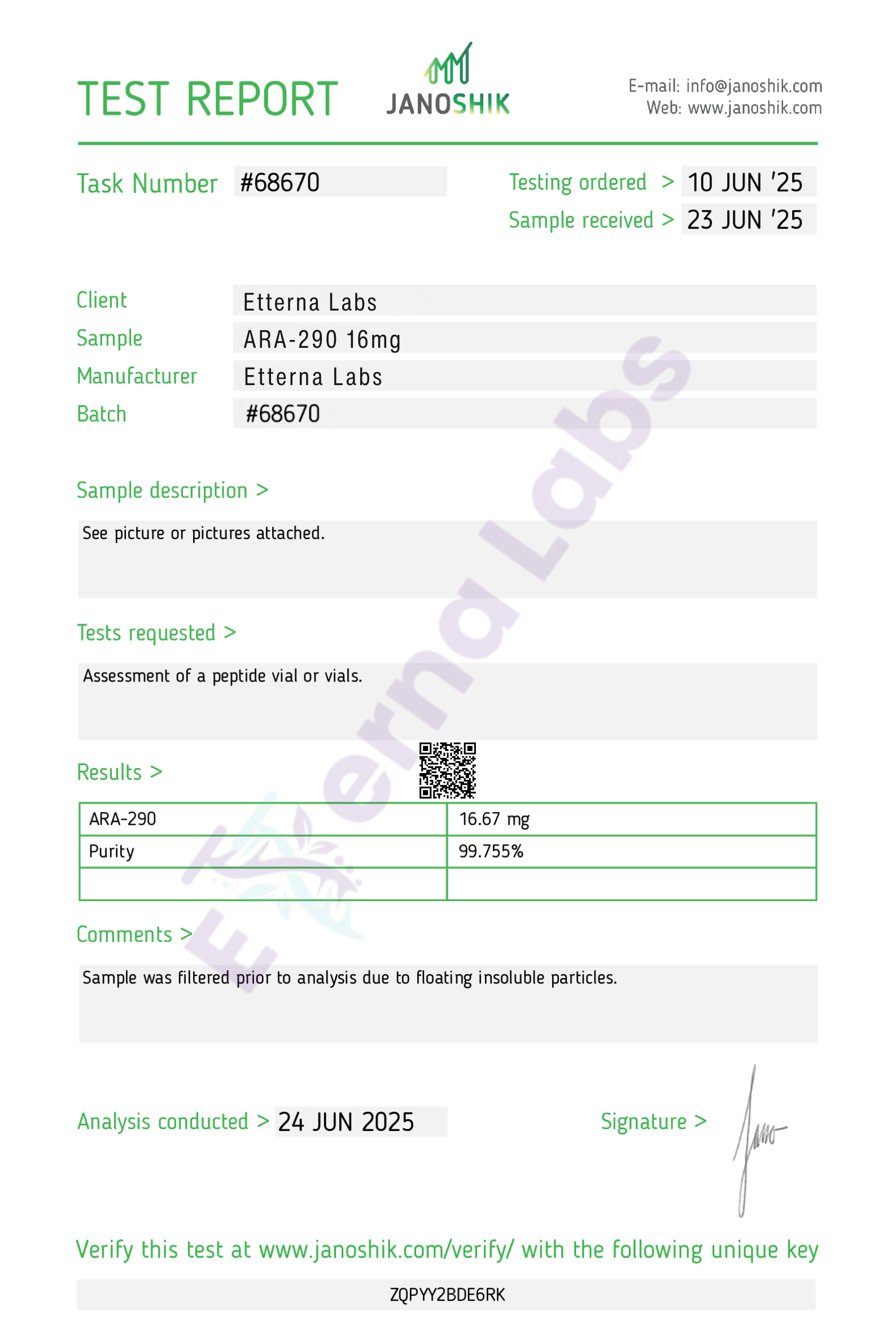
Description
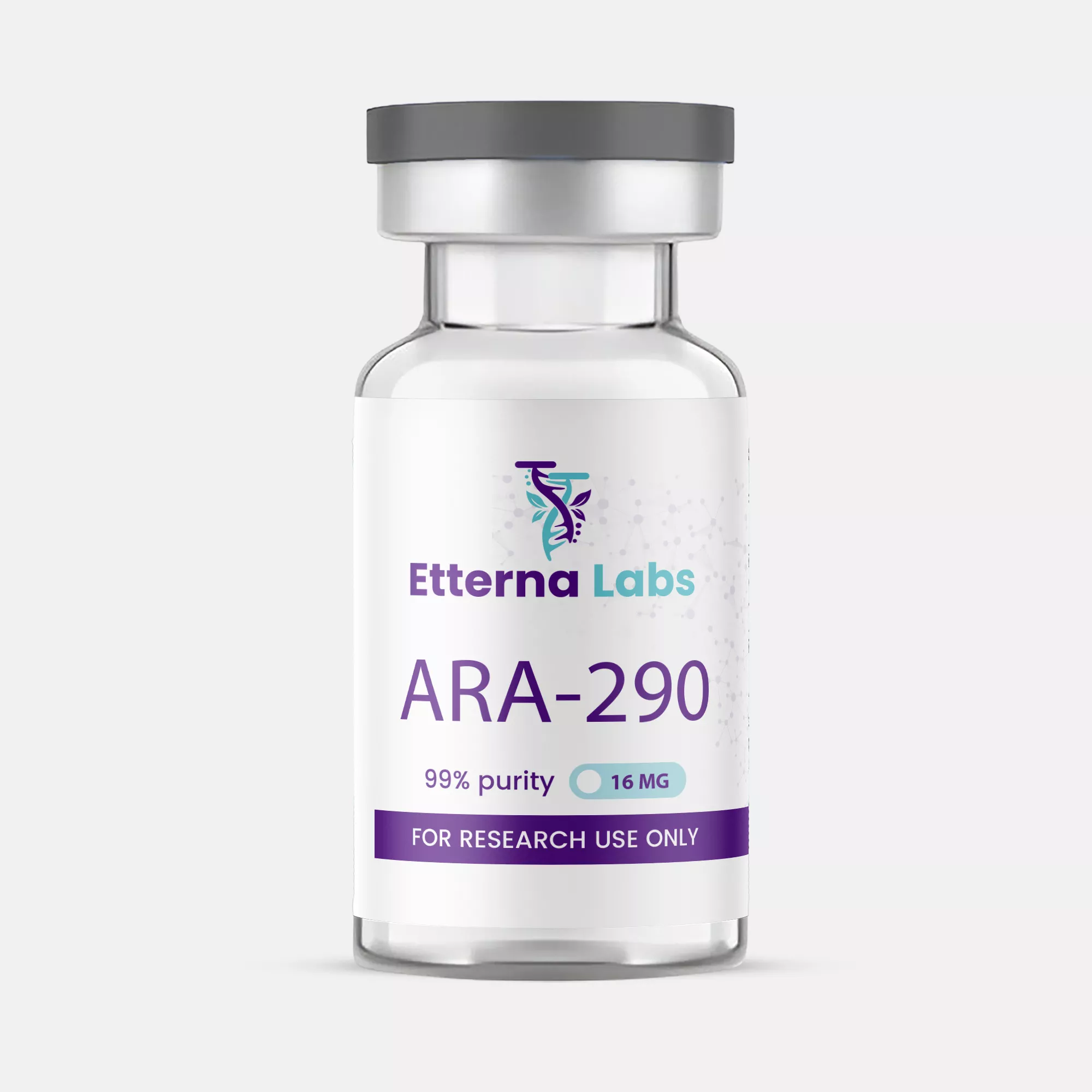
ARA-290 Research Topics:
Neural Pathway & Sensory Research:
ARA-290 has been investigated in experimental studies for its effects on neural signaling and structural nerve response in controlled laboratory models. [1]
Inflammatory Response Modulation :
Research has explored ARA-290’s activity on the EPOR/CD131 receptor pathway and its role in modulating cellular environments associated with inflammation in controlled laboratory models. [2]
TRPV1 Pathway Interaction:
Preclinical studies have explored ARA-290’s potential interaction with the TRPV1 ion channel and its influence on sensory neuron signaling in controlled laboratory models. [2]
Nephroprotective Effects:
In preclinical cell models exposed to stress conditions, ARA-290 has been studied for its potential to influence molecular pathways associated with oxidative balance and inflammatory signaling. [3]
Aging and Cellular Function Research:
Experimental models have explored how ARA-290 may influence pathways related to neuronal survival and inflammatory signaling during simulated ischemic environments. [4]
Cerebral Cell Response Studies:
ARA‑290 suppressed neuronal apoptosis and inflammation in cerebral ischemia models, highlighting its protective effects in stroke and related ischemic conditions. [5]
Reference Citation:
- Swartjes et al., 2014 – Mol Pain A small erythropoietin-derived peptide produces long-term relief of neuropathic pain and suppresses spinal microglia activation in rat nerve injury models. This preclinical study showed that Ara‑290 dose-dependently reduced mechanical and cold allodynia for up to 20 weeks and suppressed microglial activation—supporting its role in pain relief and neuroinflammation control. PMID: 24529189
- Zhang, W., Yu, G., & Zhang, M. (2016). ARA‑290 relieves pathophysiological pain by targeting TRPV1 channel: Integration between immune system and nociception. Peptides, 76, 73–79.
PMID: 26774587 - Ghassemi‑Barghi et al., 2023 – Inflammation Investigated cisplatin‑induced nephrotoxicity in vitro, ARA‑290 significantly reduced oxidative stress, inflammatory cytokines (TNF‑α, IL‑1β, IL‑6), DNA damage, and apoptosis markers (Caspase‑3, Bax), while increasing anti‑apoptotic Bcl‑2. This shows protection from toxic drug‑induced kidney injury. PMID: 36085231
- Winicki, N.M., Nanavati, A.P., Morrell, C.H., et al. (2023). A small erythropoietin-derived non-hematopoietic peptide reduces cardiac inflammation, attenuates age-associated declines in heart function and prolongs healthspan. Frontiers in Cardiovascular Medicine, 9:1096887. PMID: 36741836
- Liang, J., et al. (2024). Erythropoietin‑derived peptide ARA290 mediates brain tissue protection through the β-common receptor in mice with cerebral ischemic stroke. CNS Neuroscience & Therapeutics. PMID: 38488446